
What is inbound marketing?
Inbound marketing is a holistic marketing strategy focused on attracting, engaging, and retaining leads through high-quality content that addresses their needs. Over time, this enables you to build trust and generate conversions, making it a sustainable conversion strategy.
Who is inbound marketing best suited for?
Inbound marketing is particularly important for companies where the customer journey is long and information-driven. This is especially true within B2B, but also for B2C sales where customers need to consider several factors before making a purchase.
Why do you need inbound marketing?
There are several benefits to working with inbound marketing, and here we have listed some of the most important reasons:
- The strategy is a cost-effective way to attract qualified leads and convert them into customers.
- By focusing on high-quality content that addresses the customer’s needs, both visibility, brand awareness and authority will increase organically. This raises the likelihood of being top of mind when the customer has a need.
- You don’t come across as “pushy”, but rather as a partner who provides support on the customer’s initiative and with their consent.
- The strategy focuses on building relationships and trust with potential customers. This is therefore a way of conducting relationship marketing.
What differentiates inbound marketing from outbound marketing?
The inbound strategy differs from traditional marketing, also known as outbound marketing. Outbound marketing focuses on pushing out messages to a broad audience, while inbound attracts customers by tailoring content that delivers value to them.
Here we have created a simple model to clarify the differences between the strategies:
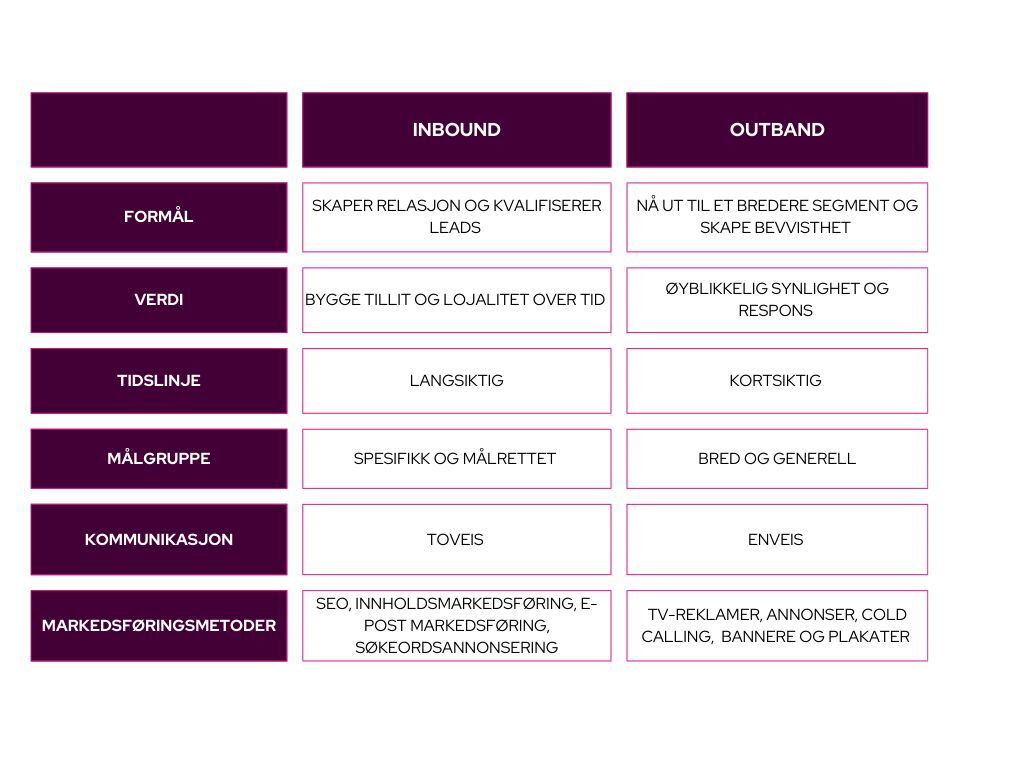
The difference shown in the table:
Inbound marketing:
- Purpose: builds relationships and qualifies leads
- Value: build trust and loyalty over time
- Timeline: Long-term
- Target audience: Specific and targeted
- Communication: Two-way
- Marketing method: SEO, content marketing, email nurturing campaigns, search advertising
Outbound marketing:
- Purpose:Reach a broad segment and build awareness
- Value: Immediate visibility and response
- Timeline:Short-term
- Target audience: Broad and general
- Communication:One-way
- Marketing method: TV commercials, ads, cold calling, banners and posters
Why is SEO important for inbound marketing?
SEO content is created to meet an existing demand and need. The content should answer what the target audience is wondering about or present them with a relevant solution to their problem. This helps you attract what we call varme leads. In other words, people who have a problem and want your solution
SEO content typically reaches a broad segment of people who use Google and search for various topics. That’s why it is important to truly understand your target audience, including their needs and pain points. This enables us to map out what they are curious about and what they search for in search engines, and create content that answers those questions. In other words, content should solve a problem and deliver value. Over time, this helps build a customer relationship that creates loyalty, trust, and a positive reputation for your company in the long term.
Do you have more questions about SEO? Read our complete SEO guide here:
5 tips on how to succeed with inbound marketing:
- Define your target audience clearly: Understanding your target audience is crucial for effective inbound marketing. Mapping out their challenges, needs, and pain points is essential to tailoring the customer journey. This forms a solid foundation for your marketing strategy.
- Be visible on the platforms where your customers are: It is important to be present where your customers are most active. Identify the most relevant channels for your target audience and concentrate both your efforts and focus there.
- Give your customers real value: Creating valuable content that answers your audience’s questions and solves their problems is at the core of inbound marketing.
- Be patient: Inbound marketing is a long-term strategy for both attracting new customers and retaining them. It pays off to build a strong inbound journey that helps potential interested customers find you.
- Use CRM systems to automate: Using a CRM-system like Hubspot makes it easier to store valuable customer information and follow up on leads.
So to summarise briefly…
Inbound marketing is a long-term conversion strategy that not only attracts customers, but also helps build loyalty and strong customer relationships. By engaging your target audience with valuable content, you strengthen not only your brand, but also the trust your customers have in you.
Do you think inbound marketing sounds cool? Read our inbound marketing guide here: