

Hvorfor har vi laget denne guiden:
Vi har laget denne guiden for å gi deg en komplett forståelse av hvorfor SEO og betalte annonser er viktig for inbound. I tillegg deler vi vår suksessoppskrift på hvordan du skal lykkes med denne strategien.
Behøver du hjelp med SEO og digital annonsering, da er vi i Solid Media rett byrå å ta kontakt med.
Hva er inbound marketing?
Inbound marketing er en helhetlig markedsføringsstrategi der hensikten er at kundene kommer til deg. Dette skjer når relevant og verdifullt innhold blir funnet av potensielle kunder når de har behov for det, og det er dermed viktig å utvikle en kommunikasjonsstrategi for aktivitetene du skal implementere. Hovedmålet til inbound marketing er å bygge merkelojalitet og skape langsiktige kunderelasjoner, og det skiller seg dermed fra typisk tradisjonell markedsføring, og denne refereres til som outbound marketing. Inbound egner seg best for B2B der kjøpsprosessen er lange og komplekse.
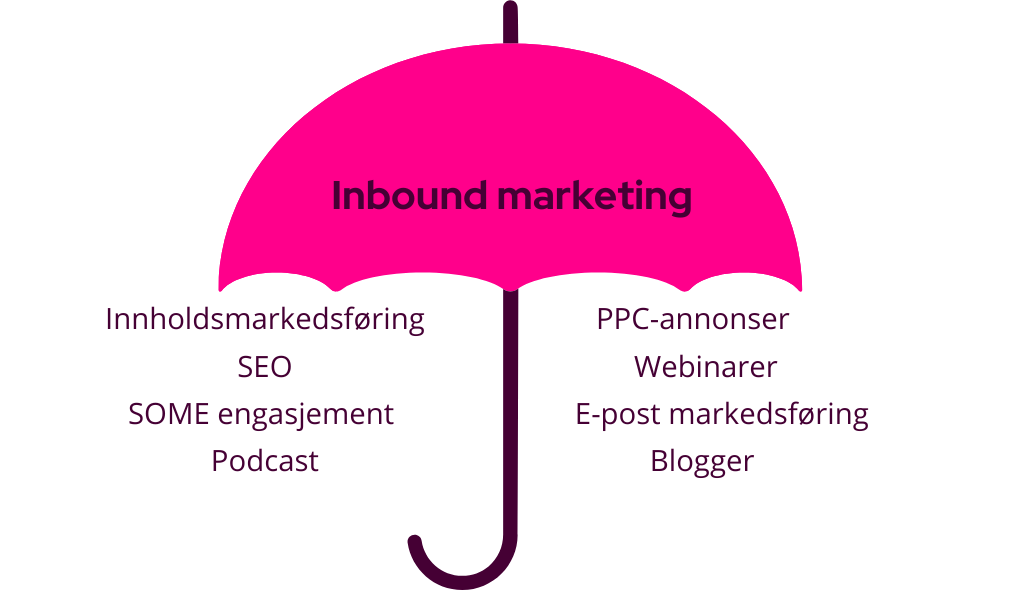
Inbound blir sett på som en overordnet digital paraply og vi har listet opp punktene som går inn under paraplyen:
- innholdsmarkedsføring
- SEO
- SoMe engasjement
- PPC-annonser
- Webinarer
- E-post nurturing kampanjer
- Blogger
- Podcaster
Hvorfor er inbound marketing viktig i 2025?
Forbrukeratferden i 2025 har endret seg fra tiden før, og bedrifter er nødt til å tilpasse markedsføringsstrategien sin deretter. De fleste ønsker ikke lenger påtrengende reklame, men ønsker heller å finne bedriften selv. Derfor er inbound markedsføring en verdifull strategi, som har som mål å tiltrekke kunder med nyttig innhold, som øker tillit og kundetilfredshet over tid.
Hubspot som CRM-system for inbound marketing
Selve tankegangen ble grunnlagt av teknologiselskapet Hubspot i 2006, da de introduserte CRM-systemet sitt. Systemet legger til rette for integreringen og administrering av alle inbound aktivitetene, og muliggjør at bedrifter kan tiltrekke og konvertere kunder på en skreddersydd måte. På den måten samkjøres salg- og markedsføringsavdelingene effektivt i systemet, og dette konseptet kalles for smarketing.
Videre i guiden tar vi deg nå gjennom inbound metodikkens fire steg, og her er Hubspot et essensielt systemet for å kartlegge brukerbehov, atferd og videre generere leads til lojale kunder:
Inbound metodikkens fire steg
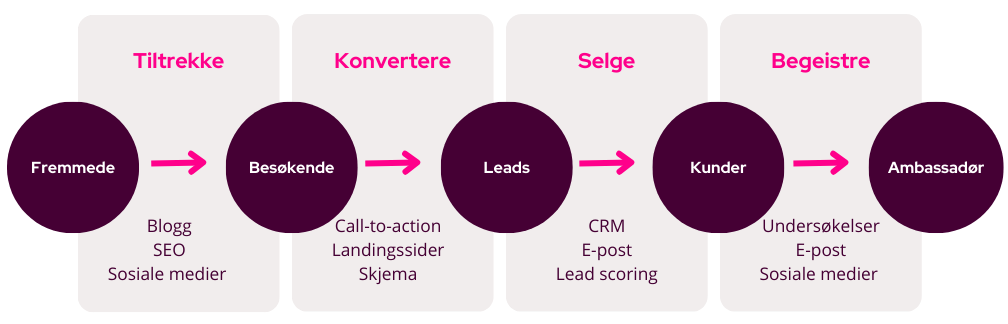
For å enkelt vise hvordan bedriften din kan drive inbound marketing, illustreres dette gjennom fire steg. Stegene er knyttet opp mot kundereisen – fra målgruppe er fremmed til lojal ambassadør:
1. Tiltrekke fremmed til besøkende:
Første steget handler om å tiltrekke ønskelig trafikk gjennom verdifullt innhold, og dette kan gjøres gjennom SEO og betalt annonsering.
2. Konvertere besøkende til lead:
- Når innhold har tiltrukket potensiell kunde er neste steg at ulike CTA-knappertrykkes på, slik at informasjon lagres i Hubspot. Eksempler på typiske CTA-knapper å implementere er webinarer og guider, og her får bruker tilgang ved å skrive inn e-post og brukerinformasjon. Alt lagres i Hubspot, og systemet er dermed en viktig suksessfaktor for å lykkes med inbound.
3. Selge lead til kunde:
- Videre sendes relevant informasjon til kvalifiserte leads basert på datadrevet markedsføring og vist interesse, og slik driver du med lead nurturing. I tillegg kan du sette opp et lead scoring system i Hubspot, og på den måten effektivt prioritere hvilke ønskede kunder bedriften din retter seg mot.
4. Begeistre kunde til ambassadør:
- Siste steg er å gi konstant skreddersydd verdi til kunder og drive relasjonsmarkedsføring. På den måten har bedriften etablert et lojalitetsprogram, og resultatet blir at man arbeide kostnadseffektivt, på grunn av lojale og langvarige kunderelasjoner.
Vår suksessoppskrift på å lykkes med inbound marketing
Vi i Solid Media har god erfaring med vellykket SEO og betalt annonsering. Dette er etter vår mening to essensielle faktorer for å lykkes med inbound, og vi skal raskt forklare deg hvorfor:
Tenk på inbound marketing som en overordnet strategi for å generere leads gjennom digitalt kvalitetsinnhold. SEO og betalt annonsering sin rolle fungerer som tiltak for å booste denne strategien i starten av kundereisen. Dette skjer når man lager innhold som målretter seg mot ønskelig målgruppe, når de har behov for det.
Suksessoppskriften vår ser slik ut:
- 1. Prioriter og implementer SEO-innhold i alle stegene i inbound-metodikken
- 2. Prioriter og implementer betalt annonsering i alle stegene i metodikken
- 3. Benytt begge strategiene for å oppnå synergieffekter
Videre i guiden skal vi utdype de tre punktene over. Siste punktet er det vi i Solid mener er hemmeligheten bak effektiv inbound marketing: nemlig å benytte begge aktivitetene.
SEO sin rolle i inbound marketing
SEO står for søkemotorotimalisering, og handler kort forklart om å benytte brukerdata til å optimalisere nettstedet ditt, slik at den synliggjøres gratis i søkemotoren. Vi i Solid Media er brennende opptatte av SEO, og mener at det å prioritere dette er en viktig del av inbound strategien i dag.
For å systematisk forklare SEO sin rolle for inbound marketing, har vi laget en punktliste over grunner til at SEO er et viktigs strategisk tiltak å implementere:
1. Strategiene har samme mål
SEO og Inbound har felles målsetning om å konvertere besøkende til nettstedet på en organisk måte, der potensielle kunder finner deg. I stedet for å jakte etter kunder er målet å lage verdifullt kvalitetsinnhold som målgruppen har behov for. Når de så søker opp behovet i søkemotoren, er begges målsetting at innholdet rangerer høyt oppe i SERPen. På den måten er formålet å ta kunden videre ned i kjøpstrakten ved å tiltrekke, konvertere, selge og begeistre kunder.
2. SEO har en viktig betydning for stegene i inbound strategien
SEO har en viktig betydning for alle stegene i inbound-strategien. Det skaper nemlig grunnlag for å kontinuerlig optimalisere innhold basert på datadrevet markedsføring, og slik vil arbeidet effektiviseres. Vi tar deg gjennom SEO sin rolle i inbound stegene:
- 1. Tiltrekke kunder
I starten av kundereisen er SEO et essensielt tiltak for å tiltrekke kunder. Dette er første steget i inbound-metodikken, og effektiviseres av SEO-arbeidet. Det skjer når kvalitetsinnhold lages, som øker synligheten til bedriften i søkemotoren på bestemte søk. På den måten legger SEO grunnlaget for en kontinuerlig optimalisering av nettstedet, slik at ønskelig målgruppe finner relevant innhold når de søker opp behovene sine.
- 2. Konvertere
Når det datadrevne SEO-innholdet fremstår som verdifullt, øker dette sannsynligheten for konverteringer til og på nettsiden din. Slik trafikkgenerering er selve kjernen av inbound, og medfører at kvalifiserte leads strømmer inn på nettsiden. Andre konverteringer som SEO kan legge til rette for er skreddersydde webinarer og guider som leads får tilgang til ved å skrive inn e-mail. Denne dataen vil CRM-systemet Hubspot lagre, og på den måten kan skreddersydde løsninger tilbys.
- 3. Selge
Kvalitetsinnhold som treffer behov inne på landingssiden din skaper økt sannsynlighet for at leads konverteres til kunder, og dette har skjedd grunnet SEO-arbeidet. Videre i prosessen kan SEO benyttes for å lage og sende relevant informasjon, basert på kundenes interesser. SEO er dermed viktig for å close viktige avtaler.
- 4. Begeistrer
Ved å utføre et nøye SEO-arbeid er målsetningen at langvarige kunderelasjoner bygges, grunnet innhold som dekker behov. Slik relasjonsmarkedsføring vil skje når innhold er skrevet med E-A-T kriteriene i bakhodet, og på den måten skapes det tillit overfor kunder og Google. Takket være SEO vil autoriteten og omdømmet til bedriften styrkes, og alt er med å bygge en solid merkevare.
Fordeler med SEO
Kunsten av å mestre SEO resulterer i at Google rangerer innholdet ditt over konkurrentene. Over tid vil synligheten medføre at bedriften din blir top-of-mind hos ønsket målgruppe, og dette øker sannsynligheten for at potensielle kunder klikker seg inn på nettsiden din. Det er flere fordeler av SEO for inbound strategien, og vi har ramset opp fire vi mener er viktige å nevne:
- Billigere i det lange løp: Selv om SEO krever tid og penger (analyseverktøy/kontakte et byrå), så koster det null når kunder klikker inn på din side. Dette er en kontrast fra annonsering der man betaler per klikk. Her er det dermed muligheter for å oppnå høy ROI på en kostnadseffektiv måte
- Målrette mot ulike traktstadier: SEO muliggjør slik at man kan lage målrettet innhold, slik at målgruppen i ulike deler av kjøpstrakten finner innholdet ditt.
- Søketrafikken er mer stabil Så lenge du fortsetter å optimalisere nettsiden din er det enklere å forutsi gratis trafikk, i tillegg til at konverteringsraten er høyere enn ved annonseringer
- Bygger merkevarekjennskap Ved å lage innhold med kriteriene E-E-A-T i bakhodet, vil nettsiden synliggjøres og over tid få mer autoritet av både Google og forbrukere.
Annonseringens rolle for inbound marketing
Det er lett å se SEO sin sentrale rolle i inbound marketing, men hva med de betalte annonseringene? Annonseringer skiller seg fra SEO, da man kjøper synlighet for å spre et budskap til en ønskelig målgruppe. Det er en rekke ulike typer annonser, og ved å forstå hvilke annonser som går under inbound tankegangen, vil du se at de ikke må undervurderes:
Inbound annonser og outbound annonser
Innenfor annonseringens verden kan det være uklarhet når det gjelder hva som kategoriseres som inbound annonser og ikke. Derfor ønsker vi i Solid Media å tydeliggjøre det vi mener er inbound annonser, hva som er outbound annonser og hvor gråsonene ligger.
Den sentrale forskjellen er tilnærmingen til hvordan man når målgruppen sin. Her skiller man mellom pull-annonser og push-annonser, og de likner på inbound og outbound annonser. For å gjøre det enkelt klassifiserer vi dem som de sammen:
- Pull-annonser (inbound): trekker til seg kunder som har vist interesse
- Push-annonser (outbound): når ut til et bredt og mindre målrettet segment, uten vist interesse
- Inbound annonser:
- PPC søkeordsannonser
- Sosiale medie annonser bruker søker etter
- Påmeldingsbaserte e-mail annonser
- Outbound annonser:
- Annonser i nettaviser
- Tradisjonelle annonser på tv, radio og trykte medier
- Display annonser som vises uavhengig av hva bruker aktivt søker etter
- Gråsoner:
Ofte er annonser både inbound og outbound, og dette skyldes at brukerne først aktivt oppsøker bedrift, og videre eksponeres for annonser uten å intensjonelt søke etter dem.
Annonsene som har flytende skille er:
- Sponsede innlegg på sosiale medier
- Innholdsmarkedsføring med salgsfokus
- Retargeting annonser
- E-postmarkedsføring
Inbound annonsene kategoriserer vi etter annonsene som bruker intensjonelt har søkt etter, og her anser vi søkeordsannonser som mest sentral. De har flere sentrale roller for inbound strategien, og vi har listet opp de vi mener er de mest sentrale:
- Umiddelbar eksponering for målgruppen
Med søkeordsannonser, oppnår bedriften rask synlighet og trafikk fra kvalifiserte leads. Dette gjøres ved at bedriften har kartlagt hvilke spesifikke søkeord brukere søker på, og på den måten vil annonsen svare på problemet kunden har når de søker det opp.
- Målretting og tilpassing av kommunikasjon
I tillegg er annonsene sentrale da man enkelt kan målrette og tilpasse kommunikasjonen til ønsket målgruppe. Dette gjøres ved å segmentere basert på geografi, demografi, interesser og valgte tidspunkter. Alt er med å legge til rette for at den ønskelige målgruppen finner annonsen når de har behov for budskapet, og dette starter kundereisen deres mot å bli kunde.
Betalt annonsering anser vi dermed som en viktig strategisk prioritering for å tiltrekke potensielle kunder i starten av inbound stegene.
- Økt konvertering
Optimaliserte søkerdsannonser øker sannsynligheten for at leads konverterer over til landingssiden, eller utfører handlingene som CTA-knappene ber bruker om å utføre. På den måten er inbound annonser en fin måte å skape økt konvertering inn til sider med ulike inbound aktiviteter.
Et eksempel er å lage PPC søkeordsannonser som direkte konverterer bruker inn til et webinar, som kunde kan laste ned ved å skrive inn e-post. Informasjon lagres i Hubspot slik at bedriften kan optimalisere annonsene sine. På den måten er søkerdsannonsering en effektiv måte å oppnå konverteringer, og arbeide mot en langsiktig inbound strategi.
Fordeler med betalt inbound annonsering
- Rask synlighet: Det kan ta opp til noen få timer å se synlighet, og på den måten kan bedriften din strategisk synliggjøre kampanjer som er sesongbaserte
- Søkeordsannonser vises over organisk søk: På den måten er det større sannsynlighet å tiltrekke kunder og bli top-of-mind
- Enkel målretting av målgruppe: Søkeordsannonser kan targete målgrupper basert på geografi, alder, sivilstatus og interesser
- Måling og analyse av resultater: Søkeordsannonser har verktøy for måling av annonseresultater. På den måten kan annonsene optimaliseres for å øke antall visninger og konverteringer.
Nå har vi tatt deg gjennom viktigheten av SEO og betalt annonsering for inbound marketing. I Solid Media mener vi at kombinasjonen av disse er oppskriften på suksess
Vi tar deg nå gjennom synergieffektene:
Synergieffekten av å benytte SEO og betalt annonsering i inbound marketing
Kombinasjonen av SEO og betalte søkeordsannonser kan ha en kraftig effekt i inbound marketing. Når disse to strategiene brukes sammen, kan de forsterke hverandre på en måte som maksimerer synligheten og effektiviteten til markedsføringstiltakene dine. Her har vi laget noen punkter som viser synergiene mellom SEO og betalte annonser:
- Søkeordsanalyser styrker effekten av PPC-søkeordsannonser
I SEO utfører man grundige analyser for å identifisere de mest relevante søkeordene for sin bedrift. Disse nøkkelordene blir deretter integrert i nettsiden og brukt til å skape relevant innhold som tiltrekker organisk trafikk. På samme måte kan søkeordsanalyser styrke effektiviteten av søkeordsannonsene dine. Ved å implementere de viktigste søkeordene i annonsene, kan du øke målrettetheten og relevansen til annonsene, og dermed forbedre resultatene av annonsekampanjene dine.
- Tid
SEO-arbeid tar ofte lang tid, og i motsetning til betalte annonser ser man ikke resultater av strategien med en gang. Den umiddelbare synligheten som annonser gir, fungerer som en støtte til SEO arbeidet når organisk synlighet ikke er etablert enda. Dette betyr at bedrifter kan opprettholde en viss grad av synlighet, mens SEO strategien fungerer i bakgrunnen.
- Testing/fleksibilitet
Siden betalte annonser skaper umiddelbare resultater, har din bedrift en mulighet til å teste og optimalisere strategier raskt. Gjennom A/B-testing og kontinuerlig justering av annonser kan bedriften raskt identifisere hva som fungerer best for å tiltrekke målgruppen og generere konverteringer. Denne innsikten kan deretter brukes til å justere SEO-strategien, for eksempel ved å identifisere de mest effektive søkeordene eller typene innhold som skal fokusere på organisk trafikk.
- Styrk autoritet
En tydelig organisk tilstedeværelse vil også bidra til å bygge tillit og skape troverdighet hos potensielle leads, noe som kan føre til at effekten av annonsene blir bedre ved å gjøre dem mer troverdige. Når en bedrift er “top of mind” hos potensielle kunder vil det også være sannsynlig at de responderer positivt på annonser fra bedriften.
- Høyere brukeropplevelse
Et nettsted som er optimalisert for søkemotorer vil vanligvis oppleve bedre resultater når det gjelder annonser også. Dette skyldes at SEO-arbeidet ikke bare fokuserer på å tiltrekke organisk trafikk, men også på å forbedre brukeropplevelsen og kvaliteten på nettstedet generelt. Når et nettsted er enklere å bruke og gir verdifullt innhold til besøkende, er det mer sannsynlig at det får høyere rangering i søkemotoren, noe som igjen øker synligheten og effektiviteten av eventuelle annonsekampanjer som kjøres på nettstedet.
Suksessfaktoren:
Ved å kombinere SEO-arbeidet med betalte søkeordsannonser kan bedriften styrke sin synlighet og effektivitet i markedsføringen enda mer. Denne kombinasjonen gir bedriften din en mulighet til å tiltrekke potensielle kunder på en mer målrettet måte, samtidig som man bygger opp merkevarens autoritet og tillit over tid gjennom organisk synlighet og relevant innhold. Kombinasjonen av strategier skaper en solid plattform for inbound marketing.
Vår reise innen inbound marketing
Solid Media sin reise innen inbound marketing startet i 2022, og i dag har vi et eget team som består av fire ansatte som jobber med inbound for vår egen merkevare. De ansatte er satt sammen på tvers av avdelingene våre, og målsettingen er å benytte SEO og betalte annonser for å drive effektiv inbound strategi.
SEO-teknikker Karoline arbeider med Inbound satsningen, og hun forteller at:
Vi har ambisjoner om å fortsette reisen med inbound, slik at vi kan hjelpe bedriften din med å lykkes på samme måte.
Suksesshistorier fra kundene våres
Flere av våre kunder har fått hjelp med både SEO og søkeordsannonsering, og har fått fantastiske resultater!
En av disse kundene er Advania Norge, som kom til oss med et ønske om å øke synlighet og merkevarekjennskapen deres. Ved hjelp av digital annonsering via søk og sosiale medier sammen med SEO-arbeid, klarte de å få en økning på 269% det siste halvåret, sammenlignet med året før!